Practical and Proven Professional Development
C O N N E C T   W I T H   U S :
  • Home
  • EdStream
  • Professional Development
    • Workshops & Webinars
    • Store
    • Brad's Bio
    • Upcoming Events
  • Resources
    • Handouts for Purchase
    • Testimonials
    • Math Videos
    • Science Videos
    • Student Gallery
    • The Velveteen Teacher
  • Blogs
  • Contact Brad
  • Brad's Other Books

The Keys to Math Instruction

4/23/2026

0 Comments

 
Picture
“I’m not good at math. I failed it once.” We’ve all heard that, but here is something we never hear: “I’m not good at video games. I tried it once and I died on level one.” When a student fails in a video game, it is engaging. He or she says, “That was cool. I’m going to start again.”
But that’s not what we hear in a math class. This tells us that there is something radically different about how video games are designed and how our math textbooks and our state standards are designed. And it all comes down to three factors:
  • Intentionality
  • Incremental development
  • Ongoing feedback
Every line of code in a video game is intentional; it’s there for a purpose. Secondly, the skills you develop in conquering level one prepares you for what will happen in level two. And lastly, you are getting constant reinforcement on your progress.
Compare that to the typical textbook layout. On the left page are a few examples, and on the right page are practice problems followed by word problems. Our state standards mandate that the problems in that lesson are at grade level, but are our students? If we teach directly from the textbook examples, any students who are not at grade level are already lost. It would be like starting a video game at level 28.
And do the practice problems build incrementally like the levels in a video game? Does problem 1 provide you with the skills to tackle problem 2? There’s a chance that the problems in the practice set were created randomly by computer software. Imagine if the levels in a video game were randomly sequenced.
Also, the student may not see math in a real-world context until those word problems at the end, and they may not know how they did until they get their homework back the next day.
We need to model our mathematics lessons after the design of video games: intentional and incremental development with quick feedback. For example, if we want to show why subtracting a negative is the same as addition, we can ask students to complete the patterns of problems below:
3–3=0
3–2=1
3–1=2
This starts simply. It is level one. All the students who can subtract one-digit numbers are on board. But what comes next?
3–3=0
As the subtracted number is lowered by one, the difference increases by one. And then what would we write?
3––1=4
But wait, it’s also true that 3+1=4. Therefore, the two negatives make a positive. Notice that we started simply and built incrementally in an intentional way. The simplicity of the first few problems gave the students feedback as they worked.

​Here is another example. This is how I help my middle school students practice operations with integers. I give them the two numbers on the sides of the X in Example 1and ask them to find the upper number and lower number. In this case, the upper number is 12 and the lower is 7. Because I begin with such a simple example, all of my students realize that the upper number is the product of the side terms and the lower number is the sum. Then we can begin to “level up.”
    
Once they understand how the puzzles work, I can introduce examples that have integers as in Example 2.
Now they are practicing multiplying and adding integers, which was my goal. Later, we level up again by giving them the top and side numbers as shown in Example 3 Now they must divide and add.
And then I give them the bottom and side numbers in Example 4, so they have to subtract and multiply.
They have practiced working with integers in all four operations. And finally, we meet the beast at the highest level shown in Example 5.
Here, the side numbers are 9 and –4. The student has truly leveled up as this puzzle is more demanding cognitively. Students approach these puzzles like levels in a video game. The brain likes to have moderate and sequential challenges like they see when gaming or doing lessons like this.
Notice that I’ve intentionally sequenced these problems to intentionally bring the student to this level. If this is an assignment, I provide an answer bank, so the student gets the critical immediate feedback.
And what is my intention with this lesson? First, it provides critical ongoing practice in all four operations with integers. More importantly, it provides an incremental lead-in to factoring quadratics. If we want to factor x2 +5x–36. We can use the previous puzzle. The solution, 9 and –4, are the solution:
x2 +5x–36=(x+9)(x–4)
Teaching math with intentional and incremental development coupled with ongoing feedback mimics how our students’ brains interact with the video games that so engage them. Our textbooks then become a resource much like the dictionary in a language arts class. It has practice sets and sample solutions, but it is not an instructional tool. The greatest instructional resource in the classroom is the teacher presenting intentional and incremental instruction.
For more examples like these, explore some of over 100 activities in my TeachersPayTeachers store like the ones below.

X Marks the Spot
Function Fun
Teaching Integers
Solving Equations
Foursquare Addition
Tangram Math
Leo's Pattern
Pyramid Math
0 Comments

Algebra with Understanding Instead of Tears

4/23/2026

0 Comments

 
Picture
 “I don’t get it.” the student complains.
“What don’t you get?” asks the teacher.
“Everything!” answers the student.

We’ve all heard that, especially in an algebra class. But what if I told you there is a way to avoid that conversation? It’s true. I found a way to introduce the following algebra concepts in a way that it just makes sense to students:
  • Working with variables
  • Translating word problems into math
  • Combining like terms
  • Understanding the properties of algebra
  • Solving equations
How do I know it works? Because I have used this unique approach in my own classroom for over 30 years. And teachers across the U.S. have tried it with success as well. In fact, this lesson was piloted with over 100 students in 4th and 5th grade classes, and they not only “got it,” they enjoyed doing algebra as well.
And the best part was that I never told them how to do algebra. It made so much sense in the format I presented that they taught themselves.
I began by showing them the fast-food menu shown here. Then I told them I was going to make some math problems based on it. They were expecting to see numbers, but I wrote:
h+f=
You should have seen their confused faces…and then the immediate change as the light came on and they shouted, “$2.90!” We did a few similar examples, and then I threw them this curve ball:
3f =
Immediately, they said, “$3.15.” I asked, “How did you get that?” They said, “We multiplied.”
“Why?” I asked, “It doesn’t say to multiply.”
“It just makes sense,” they replied. Without me telling them how, they began to see how letters could be used to replace number and how to calculate with them.
Next I gave them orders that customers had placed and asked them to write them algebraically. Notice that each one adds an incremental increase in thinking.
  • I'd like four hamburgers, six orders of French fries, a large soda, two medium sodas, and an extra-large soda. (4h+6f+l+2m+x)
  • I want three cheeseburgers, one hamburger, a small soda, two fries, a medium soda, and another hamburger. (3c+h+s+2f+m+h or 3c+2h+s+2f+m Some students combined like terms.)
  • Let's see… I think I'd like three hamburgers and a cheeseburger, three fries, a large soda, two medium sodas, and an extra-large soda. Add another order of fries on that and make one of those hamburgers another cheeseburger. (3h+c+3f+l+2m+x–h+c or 2h+2c+3f+l+2m+x Changing one’s mind introduces subtraction into the expression.)
This led naturally into combining like terms. I wrote this expression on the board and asked the students to write it more simply for the cook.
(x + c) + (2f + c + x) + (m + 2f + c) =
Again, I didn’t show them or tell them how to do this, yet they wrote:
2x+3c+4f+m
We worked more examples with increasing difficulty until I wrote this;
(3h + 2f + x) + (c + f + m) – (h + m + f) =
Interestingly, the students were able to distribute the negative sign across the terms – a commonly missed skill in algebra.
This led naturally into exploring the properties of mathematics:
  • Commutative property: h+f=f+h
  • Associative property: (2h+f)+(c+m)=(2h+m)+(c+f)
  • Distributive property: 2(h+m)=2h+2m
For solving equations, I asked them to imagine that they were the cook, and someone had written down the wrong letter in the order. Could they figure out what the w is?
h+6w=$8.15
Interestingly, even the 4th and 5th graders were able to do this even though they had not been taught to solve equations. They used subtraction and division in steps 1 and 2, even though the problem has an addition sign and implied multiplication (6•w). What was more amazing was that these students had been taught order of operations, yet they all subtracted before dividing.
That left me thinking, if there is this much algebraic intuition residing in their brains at age 10, how can we believe that our students can’t learn algebra?
In my 8th grade algebra class, we also used the menu to approach other concepts such as solving systems of equations.
If you’d like a free copy of the handout, click the “handout” button below. And to watch a video explaining the whole process, click the “video” button.

Handout
Video
0 Comments

If I could start over...

7/29/2017

1 Comment

 
​Today I asked on Twitter, “If you could start your career over, what one thing would you do differently?” I expect some interesting responses, but for me, there is one change that stands out. I would be more relaxed and personable with the students.
After over three and a half decades in education, I am finally getting close to a sweet spot. I look forward to the start of the school year and wish I could indeed start my career over with what I have learned.
Read More
1 Comment

No grades, just learning

4/29/2017

2 Comments

 
Picture
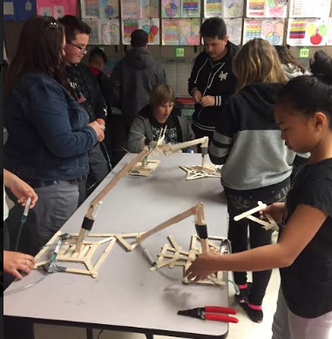
I’m conducting a bold experiment. Six weeks ago I started teaching a new elective for our third trimester. Even though Mistletoe Elementary is a STEM school, I have more ideas than time, so I offered to teach an elective simply called “STEM”. On the first day, two dozen 6th through 8th grade students arrived, and the first one in the door asked, “How are you going to grade this class?” I answered honestly, “I don’t know; I haven’t thought about it.” Now a month and a half later, I have not issued any ​grades, yet the students rush to class each day, work from the moment they arrive, complain when they have to stop and clean up, and I have had zero students off task and no behavior problems.


Read More
2 Comments

Are boys lost in the classroom?

4/1/2017

2 Comments

 
​I’ve noticed that when I have a female substitute, the boys in my 8th grade classes get in trouble. When I have a male substitute, they do not. I don’t think the issue is with the substitute (nor their gender) as these are good teachers with successful track records. So the other 8th grade teacher and I did a bold experiment. ​

Read More
2 Comments

Ten reasons to teach STEM, part 10

1/1/2017

2 Comments

 
“Are we teaching for our past or for their future?” This is the question that California high school educator, Bill Lombard, once asked me. It is one I have stopped and asked myself again and again ever since. We have spent time over the past year looking at an article by Sarah Wiggins titled “What is STEM and why should I teach it?” In the article, Ms. Wiggins listed her top ten reasons for making STEM instruction the foundation for your math and science curriculum.

Read More
2 Comments

Ten (or eleven) reasons to teach STEM (part 9)

11/30/2016

0 Comments


"STEM requires students to actively engage"

I learned early in my career – through the process of many failed lesson plans – that students must be doing something or they are not learning. Learning is not a passive endeavor or a spectator sport. If a student’s primary task was sitting and listening to me, I was asking for trouble. A bored mind is a dangerous mind.

Read More
0 Comments

October 27th, 2016

10/27/2016

0 Comments

 
Picture
A half century ago, we could teach content and know that we were preparing students for better employment opportunities. The more content they mastered, the better chance they stood of getting a good job. To some degree, businesses were looking to hire those who knew the most.
Today that has changed. Information is readily available, and business wants to hire people who can think and solve problems. As teachers we have long understood that it is not enough to simply present content. We have to create students capable of high-level thinking.


Read More
0 Comments

Ten (or Eleven) Reasons to Teach S.T.E.M., Part 7

9/27/2016

0 Comments

 
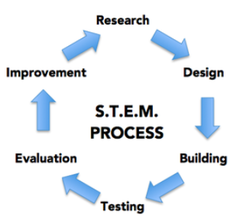
For the past few months, we have been exploring the ten best reasons to incorporate S.T.E.M. instruction into our schools. This series is based on an article by Sarah Wiggins titled “What is STEM and why should I teach it?” Ms. Wiggins’ seventh reason is that S.T.E.M. makes failure a learning opportunity. This is the number one reason why I like to teach S.T.E.M.
In the past, I taught a unit of study and then gave students a culminating test. Whether they passed or failed, the state standards and the clock mandated that I move on. Hopefully, most of the passengers were still on the train, but even with the best of my efforts, I lost a few in the process.

Read More
0 Comments

Get up, get out, get educated

8/31/2016

0 Comments

 
Picture
Are we putting our students at a disadvantage by educating them in desks? Here is what I mean by that question. Recently I had the opportunity to do some educational work at Lava Beds National Monument in the high desert of California. It was part of a class I was taking through Colorado University on “place-based education.” The course explored the idea of educating students on-site. They are literally located in the place they are studying.


Read More
0 Comments
<<Previous

    Author

    Brad Fulton is an award winning teacher and nationally recognized provider of professional development with over three decades of experience in education.

    Categories

    All
    Curriculum
    Pedagogy
    Resources
    School Climate
    STEM
    Videos

    Archives

    April 2026
    December 2017
    July 2017
    April 2017
    January 2017
    November 2016
    October 2016
    September 2016
    August 2016
    July 2016
    June 2016
    May 2016
    April 2016
    February 2016
    January 2016
    November 2015
    September 2015
    July 2015
    June 2015
    May 2015
    April 2015
    March 2015
    February 2015
    January 2015
    December 2014
    November 2014
    October 2014
    September 2014
    July 2014
    June 2014
    May 2014
    March 2014
    February 2014
    January 2014
    December 2013
    November 2013
    September 2013
    August 2013
    June 2013
    April 2013
    March 2013
    February 2013
    January 2013
    December 2012
    November 2012
    October 2012
    September 2012
    August 2012
    February 2012
    December 2009

    RSS Feed

TTT Press

Home
Blog
Professional Development
Store
Resources
Other Books by Brad
Contact Brad

What our customers are saying:

Thank you for a well-organized, meaningful, and engaging presentation that gets to the heart of the matter: connecting context and concepts in instruction.  Terrific!
Linda Buck – Principal
I love when I can go back to the classroom and use what I just learned.  Thank you very much for your expertise and enthusiasm.
Kim Clay – middle school teacher
© 2013 by Brad Fulton and TTT Press